JOURNAL / VIDEO EVIDENCE

A video can be real.
The story can still be wrong.

Before sharing a dramatic clip, trace where it came from, when and where it was recorded, and what it actually shows. A detector score is only one small part of that work.

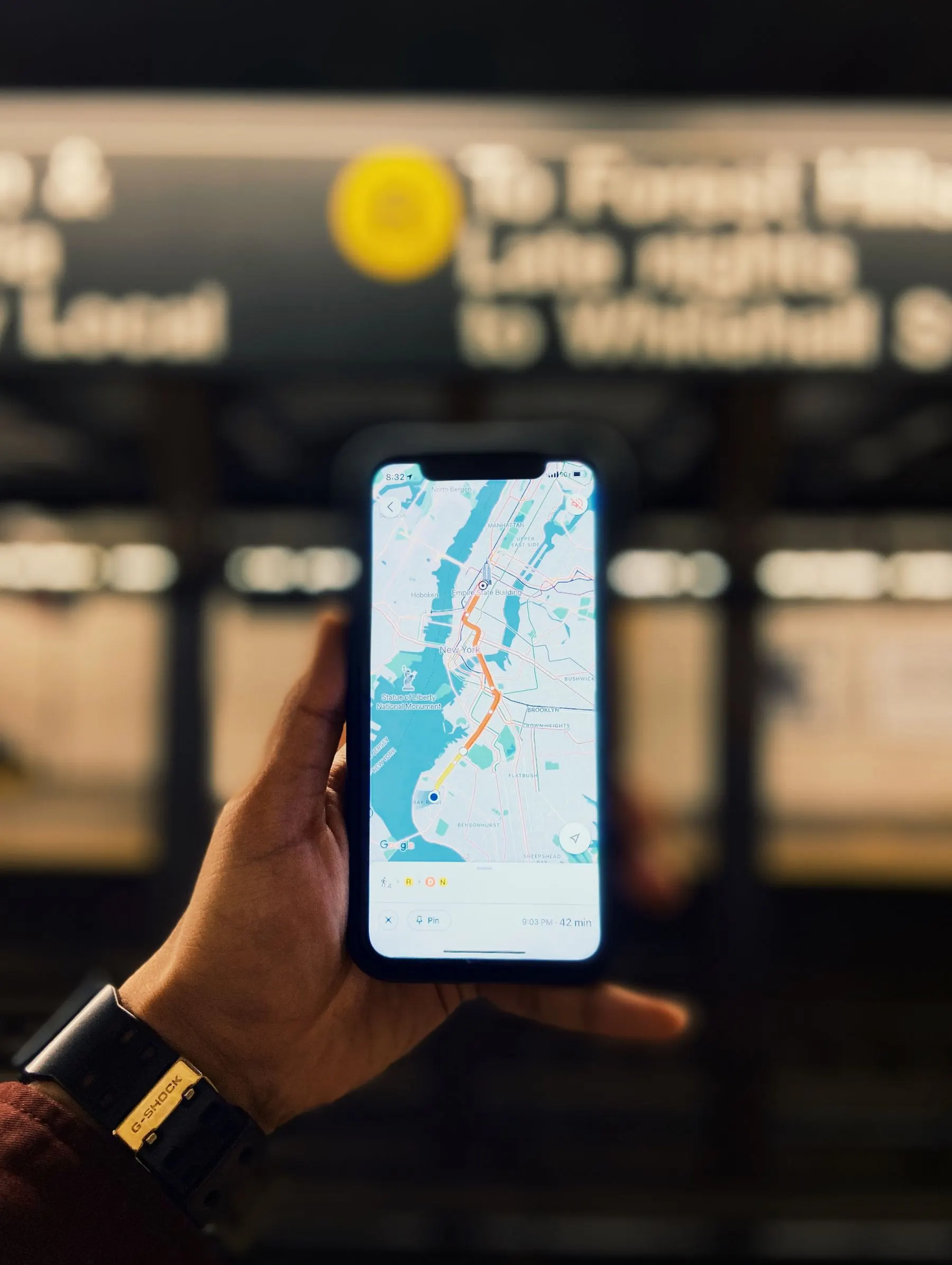
A phone displays a city map while its user checks a location.VIDEO / SOURCE AND CONTEXT / SYMPLOKA
A FRAME IS A LEAD, NOT A VERDICT

Find the scene behind the clip.

The strongest check connects the original source, visible details, and independent evidence about the event.

01 / VERIFY THE CLAIM, NOT JUST THE FILE

An authentic recording can be old, edited, or given a false caption.

“Is this video real?” hides several different questions. Was the file generated or manipulated? Is it the same footage that was originally recorded? Does it show the claimed place, time, people, and event? A genuine clip from last year can be reposted as breaking news. A real scene can be cropped until its sequence or meaning changes.

Write down the exact claim attached to the clip before you investigate. Then separate what is visible from what the caption asks you to believe. “A crowd is running” is an observation. “The crowd is fleeing today’s fire at this location” adds a cause, date, and place that need their own evidence.

02 / TRACE THE EARLIEST VERSION

Start with the link and account that carried this copy.

  1. Save the post URL, account name, publication time, caption, and any surrounding text. A screen recording of the video is less useful than the original post when you need to trace circulation.
  2. Look for an earlier upload from the creator, eyewitness, news organization, or public authority. Search distinctive phrases from the caption and visible signs or landmarks.
  3. Choose two or three clear, distinctive frames and run them through a reverse image search such as Google Lens ↗. A match can reveal an older copy or a different caption; it does not prove who recorded it.
  4. Compare full versions and alternate angles when available. A second recording of the same moment can clarify sequence, camera position, or what happened just outside the first frame.
  5. Keep the capture date separate from the upload date. A recent post tells you when that account shared a file, not when the scene was recorded.

Amnesty International’s Citizen Evidence Lab describes finding earlier versions through frame searches, then using another angle and recognizable landmarks to investigate a clip’s context. Those techniques still help, but each result needs to be checked against the exact claim and current source.

03 / CHECK PLACE AND TIME TOGETHER

One matching landmark does not establish when a clip was filmed.

Use visible details as leads: street signs, building shapes, mountain profiles, storefronts, transit routes, weather, shadows, vegetation, and the position of the sun. Compare several independent features with maps, archived imagery, local reporting, or other recordings from the scene.

PlaceDoes the road layout, skyline, sign, or landscape match the location named in the post?
TimeDo daylight, weather, seasonal details, and the sequence in other sources fit the claimed date?
EventDo independent reports, public records, or other recordings support that this event happened there?
LimitsCould an edit, crop, old upload, or similar-looking location explain the clues?

Report only what the evidence supports. If a clip clearly matches a street but its recording date remains unknown, say that. Avoid publishing a precise location when it could expose a vulnerable person or put someone at risk.

04 / INSPECT PROVENANCE WHEN PRESENT

Signed history can help establish a file’s path.

Some MP4 video files can carry C2PA Content Credentials: signed statements about creation, editing, or other recorded actions that a compatible verifier can validate against the media. Check who signed the record, which file it covers, and whether the signature and content binding validate. C2PA is opt-in and format-dependent, so many ordinary clips will have no credentials.

For a public, non-sensitive file, the CAI Verify tool ↗ can inspect supported media. For private footage, use the C2PA Tool locally ↗ instead of uploading it. Check each tool’s current format and trust-list support before interpreting a result.

A valid provenance record is evidence about the history it records, not proof that the caption is truthful or that the scene means what a post claims. No record leaves the provenance unknown; it does not prove a clip is fake or AI-generated. A platform export or edit may also change which metadata remains available.

For a deeper explanation, read how Content Credentials work for images ↗ and consult the C2PA technical specification ↗.

05 / USE DEEPFAKE DETECTORS CAREFULLY

Detector results change with the clip and the method.

Deepfake classifiers estimate whether the frames or motion patterns resemble examples their model was tested to recognize. They do not identify the person who recorded a video, establish its date, or verify the event in the caption. Re-encoding, compression, lower resolution, new generators, and unfamiliar scenes can all affect the result.

A peer-reviewed 2024 assessment tested specific detectors after realistic video processing. It found that heavy compression, reduced resolution, and video noise could undermine the methods evaluated. A separate, non-peer-reviewed 2025 benchmark used videos circulating in 2024 from 88 websites and 52 languages; its authors reported lower open-source detector performance than on earlier academic benchmarks. Both findings describe particular methods and datasets, not the accuracy of every detector today.

A detector can contribute one signal when a trained reviewer considers a clip. Do not turn its confidence score into a yes-or-no statement about a person, a public event, or the whole video. For audio-only messages, see how to verify a suspicious voice message ↗.

06 / KEEP THE CHECK REPRODUCIBLE

Leave a short trail another person can follow.

For a consequential clip, record the source link, the earliest copy you found, the frames or landmarks you checked, the independent evidence, and what remains uncertain. Keep the original file when you are entitled to do so. Avoid uploading a private or sensitive video to an unknown service just to get a detector score.

Claim attached to the video:
Post and account:
Earliest copy found:
Location clues:
Date and event evidence:
Provenance check, if available:
Independent sources:
What remains uncertain:
Conclusion: [supported / uncertain / contradicted]

Prefer a precise conclusion over a binary label. “The frames match an older clip of this street; today’s date is unverified” is more informative than “fake.”

RESEARCH, STANDARDS & PRACTICEAmnesty International Citizen Evidence Lab: finding older footage and checking location clues ↗WITNESS: Video as Evidence — verifying eyewitness video ↗Lu & Ebrahimi, Assessment framework for deepfake detection in real-world situations (2024) ↗Chandra et al., Deepfake-Eval-2024: an in-the-wild benchmark (2025 preprint, revised 2026) ↗Deepfake-Eval-2024 dataset and evaluation code on GitHub ↗C2PA Technical Specification 2.4: provenance, validation, and live video ↗C2PA Tool: inspect media manifests locally ↗