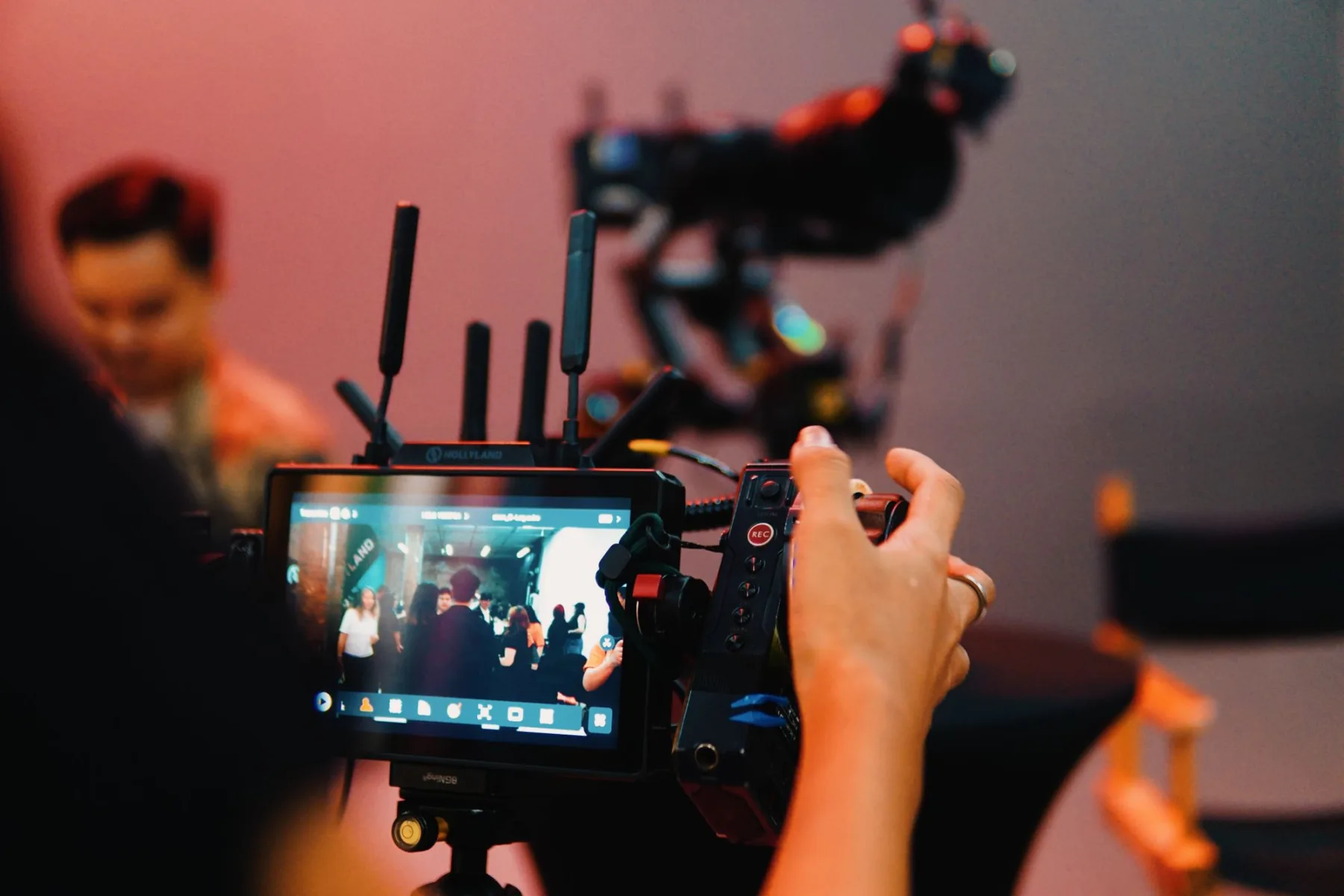
A clip adds time, motion, and often sound.
A video can be represented as ordered frames with timestamps. A product may also process audio, captions, or other metadata. The task decides which signals matter: reading a sign is a frame-level visual question; describing how someone opens a door depends on the sequence.
A visual path: video → sampled frames → space and time representations → task-specific output.
Long clips contain many frames, so systems often sample selected moments or divide the video into segments. Sampling saves computation and storage, while it can skip a brief event. The interval, resolution, and clip length are design choices with direct effects on what a model can observe.