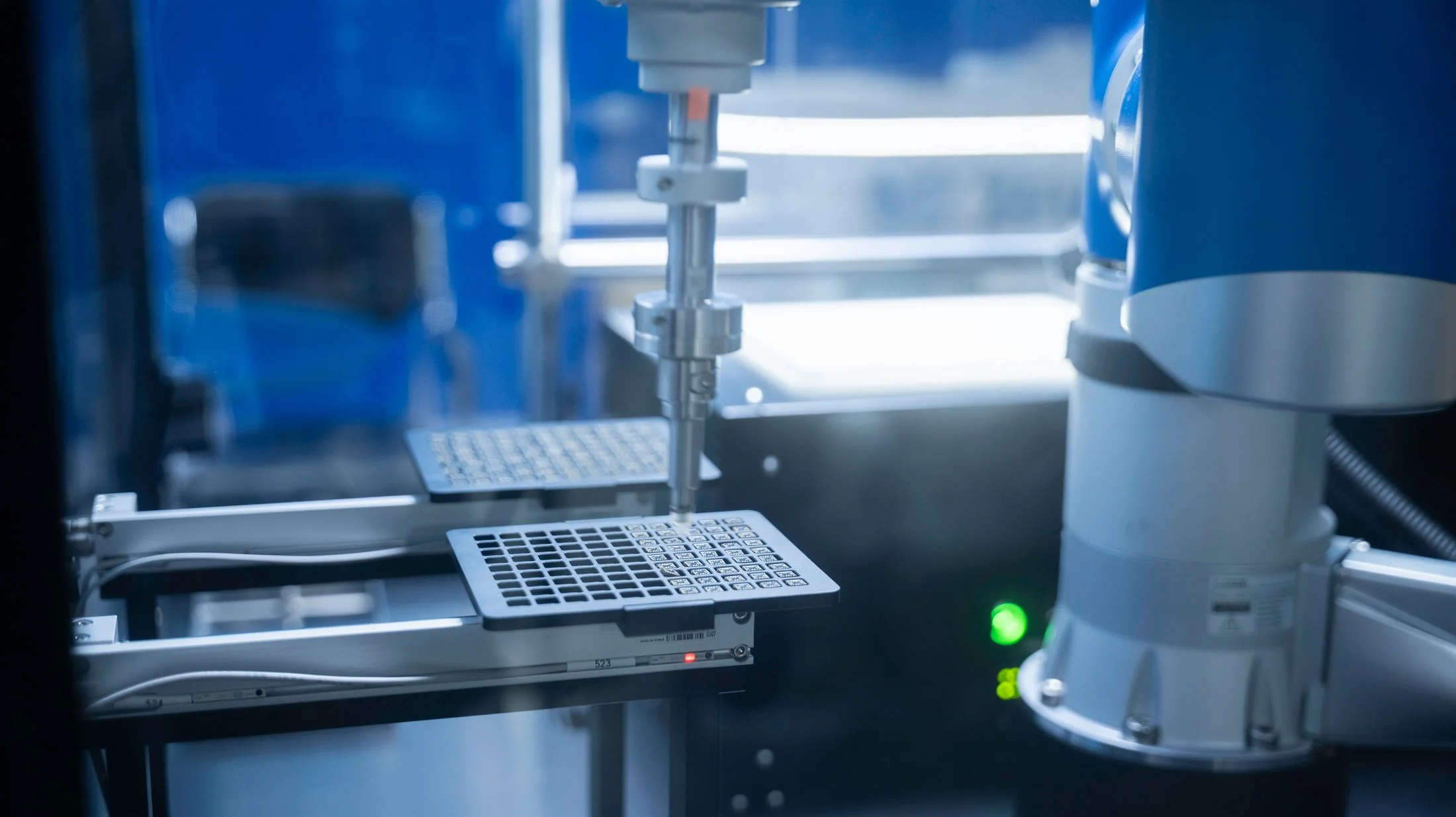
Predict how an environment may respond.
In robotics and agent research, a world model is a learned representation or simulator of how an environment changes. Given what it has observed—and, in an action-conditioned system, a candidate action—it estimates a possible next state. A planner can compare those estimates before choosing what to do.
The word is used across different research traditions, so it does not name one architecture. Some systems predict future pixels or video frames. Others predict a compact latent representation: features that preserve information needed for a task without reconstructing every visible detail.
ObserveRepresent the current scene, object positions, and relevant system state.
PredictEstimate what may change under one or more possible actions.
ChooseCompare those futures against a goal, constraint, or cost.
Check againExecute a bounded action, observe the real result, and update the next decision.
The loop is the point. A predicted image that looks convincing is not enough if the system cannot use it to choose an action and then check the result.