JOURNAL / AI FOUNDATIONS

What is AI?
Models, methods, systems.

Artificial intelligence is a broad family of computer methods and systems that use inputs to produce useful outputs. The label covers many different techniques, tasks, and products.

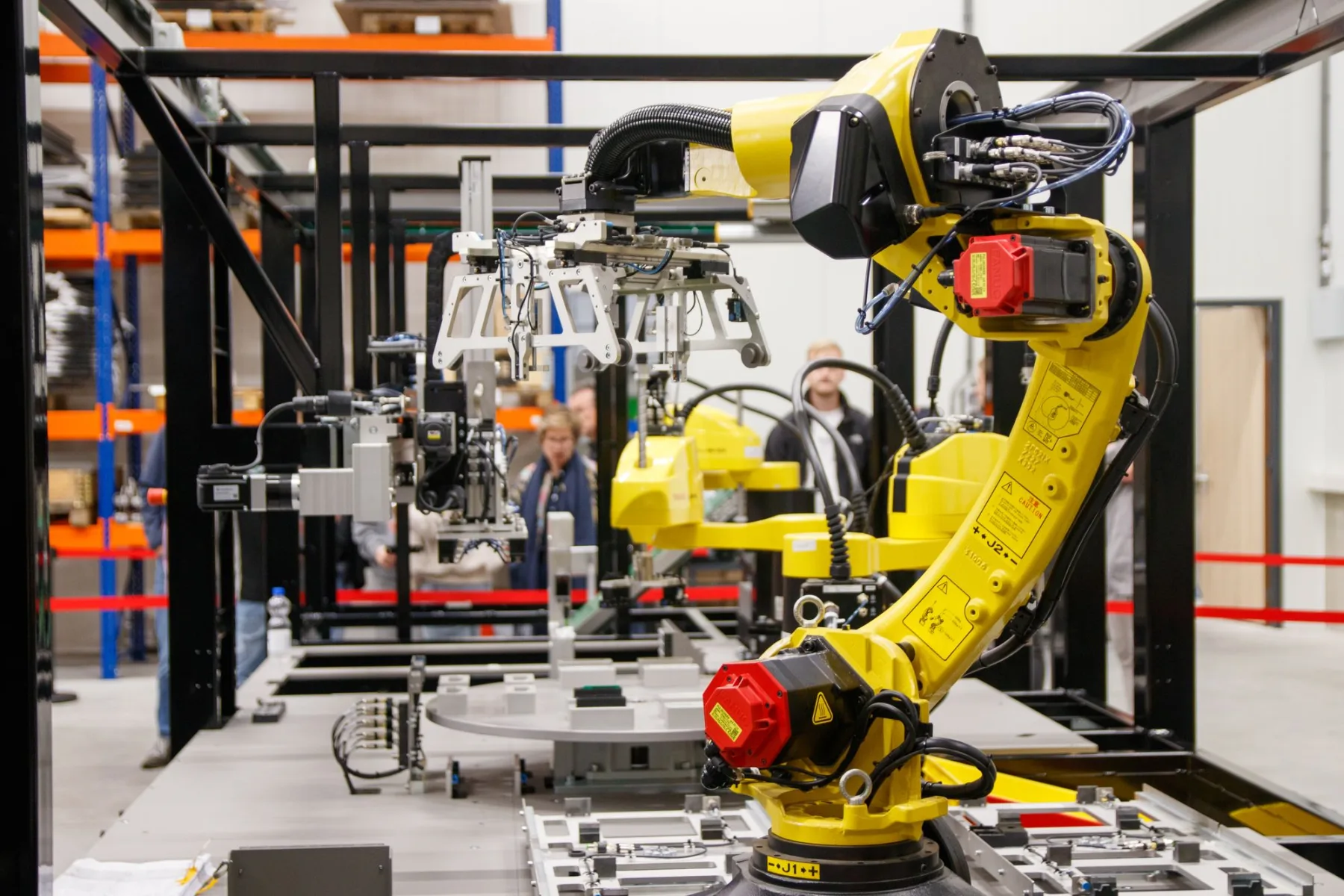
An industrial robotic arm works inside a manufacturing facility.AI SYSTEMS / PHYSICAL & DIGITAL / SYMPLOKA
ONE VISIBLE APPLICATION

A robot can use AI. So can ordinary software.

A machine’s appearance alone does not tell you which methods control it. Start with the input, the model or rules, and the output.

01 / A PRACTICAL DEFINITION

Look at what a system infers from its inputs.

Definitions of AI vary by purpose. The OECD describes an AI system through its inputs, objectives, and outputs, which can include predictions, generated content, recommendations, or decisions that influence physical or virtual environments. NIST’s glossary collects several definitions from different standards and publications, reflecting how broadly the term is used.

For a practical explanation, ask what goes in, what the system produces, and what role the output plays. An answer may be a label, a forecast, a paragraph, a suggested action, or a control signal.

02 / MODEL, SYSTEM, PRODUCT

A model is one component in a larger path.

ModelA trained or encoded component that maps inputs to outputs, such as a class label, a score, or generated text.
AI systemThe software, hardware, data, model, and connected procedures that operate together to produce an outcome.
ProductThe user-facing application, with its interface, settings, permissions, storage, providers, and review steps.
ContextThe task, people, environment, and consequences that determine whether the outcome is useful.

A model name tells you little about the full product. Data sources, instructions, retrieval, tools, and application rules all shape what people experience. The OECD’s updated system definition discusses models as components within broader systems; NIST defines an AI system broadly across software, hardware, applications, and tools.

Explore how language models generate text ↗ and how agents use tools to take steps ↗.

03 / MANY METHODS, MANY TASKS

Machine learning is a major approach within AI.

Some AI methods use knowledge represented in rules or structures. Machine learning uses examples or feedback to fit a model for a task. Many products combine learned models with ordinary code, curated data, and explicit rules.

A robot arm can follow a fixed sequence of instructions. Another system may use a learned vision model to estimate where an object is before the arm moves. Automation describes work carried out by software or machinery; the word alone does not say whether an AI method is involved.

See how machine learning uses examples ↗ and how computer vision works with images ↗.

04 / AI, ML, DEEP LEARNING, GENERATIVE AI

These terms describe related ideas at different levels.

Artificial intelligenceThe broad field of methods and systems that perform tasks such as recognition, prediction, planning, language processing, or action.
Machine learningA family of methods that fits models from data or feedback. It is one approach used in AI.
Deep learningMachine learning based on neural networks with multiple layers. Many current language and image models use it.
Generative AISystems designed to produce content such as text, images, audio, or video. This describes a task and output; it is not a separate measure of intelligence.

These labels overlap. A generative system may use deep learning, and an AI product may also rely on retrieval, search, or rules. Start with a closer guide to generative AI ↗, then explore deep learning ↗, image generation ↗, and multimodal AI ↗.

05 / INPUT TO OUTCOME

Different systems transform different kinds of input.

  1. Recognition. A vision model receives an image and returns a category or location.
  2. Prediction. A forecasting model uses past observations to estimate a later value.
  3. Generation. A language model uses a prompt and context to create a sequence of text.
  4. Recommendation. A ranking system orders options against a task or preference signal.
  5. Action. An application can use a model’s output to request a tool or control a process, with permissions enforced by the surrounding software.

Training changes a model using data or feedback. Inference is the step where a deployed model uses an input to produce an output. A product may also retrieve information, call tools, store history, or ask a person to review a result.

06 / TEST THE USE, NOT THE LABEL

“It uses AI” is not a quality evaluation.

  1. State the task. Define the input, expected output, and user who will act on it.
  2. Test representative cases. Include typical inputs, unusual examples, and conditions where mistakes matter.
  3. Measure the outcome. Match the metric to the task, such as recognition errors, forecast accuracy, or successful completion.
  4. Review the whole product. Check data handling, access, connected tools, human review, and recovery from errors.
  5. Compare useful alternatives. A smaller model, a rules-based workflow, or a person may fit a task better.

For a detailed guide, see how to choose a model for a real task ↗, how to read a benchmark ↗, why fluent answers can still be wrong ↗, and what AI text detectors can tell you ↗.

07 / CONTEXT & CONSEQUENCES

A model’s output matters through the system around it.

Accuracy, privacy, fairness, security, and safety depend on the task and the people affected by its results. A low-impact suggestion and an automated decision can require very different evidence and oversight.

Map where information goes with the AI privacy guide ↗. For differences between groups and the choices behind fairness measures, read the AI bias guide ↗, then see how AI alignment connects goals with behavior ↗.

DEFINITIONS & REFERENCESOECD.AI, Updates to the definition of an AI system ↗NIST CSRC, Artificial intelligence glossary ↗NIST CSRC, Artificial intelligence system glossary ↗NIST, Artificial Intelligence Risk Management Framework 1.0 ↗scikit-learn source code: an open-source machine-learning toolkit ↗